
August 11, 2026
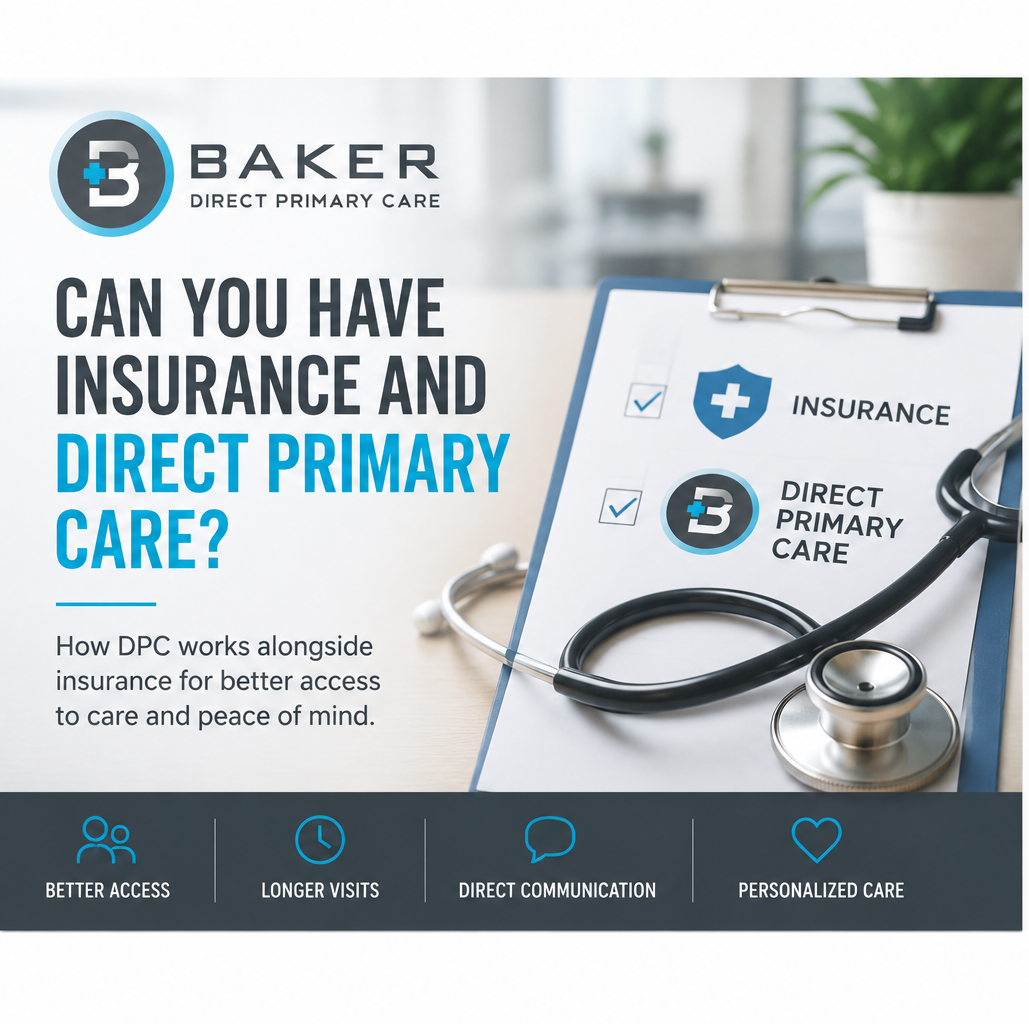
Patients throughout Liberty Lake, North Idaho, Spokane Valley, and the greater Spokane area often ask whether Direct Primary Care works alongside traditional health insurance. The good news is that you can absolutely have both — and many patients find the combination provides better access to care and improved healthcare value.
If you’re researching Direct Primary Care (DPC), one of the most common questions you probably have is:
“Can I still have health insurance if I join a Direct Primary Care practice?”
The answer is simple:
In fact, many patients find that combining a Direct Primary Care membership with a health insurance plan gives them the best overall healthcare experience.
At Baker Direct Primary Care, we often explain that DPC is not meant to replace insurance entirely. Instead, it changes how you access your everyday primary care needs while allowing insurance to remain in place for larger medical expenses.
Traditional primary care practices bill insurance companies for office visits and services. This system often creates:
Direct Primary Care works differently.
Instead of billing insurance for routine primary care visits, patients pay a simple monthly membership fee. In return, they receive direct access to their physician and a more personalized healthcare experience.
Most DPC memberships include services such as:
Health insurance still plays an important role for:
Think of it this way:
Many patients choose to pair DPC with:
This combination can often provide better access to care while helping reduce overall healthcare spending.
One of the biggest frustrations in traditional healthcare is difficulty reaching your physician. Many patients are used to:
With DPC, patients often enjoy:
Traditional insurance-based healthcare can sometimes make pricing difficult to predict.
DPC memberships are designed to be straightforward and transparent. Patients know what their monthly membership includes, which helps reduce uncertainty around routine care costs.
When patients have easier access to their doctor, they are often more likely to:
This proactive approach can improve long-term health outcomes and help patients avoid unnecessary urgent care or emergency room visits.
For most people, no.
Direct Primary Care is best viewed as a complement to insurance rather than a replacement for it.
While some individuals choose alternative insurance arrangements, most patients still maintain some form of health coverage for major medical events.
DPC can be especially helpful for:
You do not have to choose between health insurance and Direct Primary Care.
Many patients discover that combining the two offers:
At Baker Direct Primary Care, our goal is to make healthcare more personal, accessible, and patient-centered — while helping patients better understand how Direct Primary Care fits into their overall healthcare plan.
If you have questions about how Direct Primary Care works or whether it may be a good fit for you or your family, we’d be happy to help.


.svg)
.svg)
